
He Is Risen
Now our passover is sacrificed for us.

There’s a meme that internet doofuses used to share around this time of year, about how the word “Easter” is a repurposed fertility ritual named after the Mesopotamian goddess Ishtar. It’s not. Even the mistakes in this idea are mistaken. It’s possible that in England (and England only) Easter replaced—by design—the festival of a pagan spring goddess named Eostre.
That’s if you believe the 8th-century monk Bede, who is our only source for this conjecture. He is called “the Venerable,” after all. But he also may have been riffing a little on this one. Something to do with East—the place of sunrise and spring—is almost certainly involved in the English name for this great cosmic day of rebirth.
Christians are entitled to believe that the whole world is poetry for expressing the character of God, including and especially his death and resurrection. They were aware that hints and forebodings of this great triumph were glinting all throughout pagan myth, since everyone could see the seasons and the stars. Spring is a metaphor for rebirth and renewal built into the girders of time itself—everyone could see this. They just didn’t know how much renewal, how much rebirth.
It’s this far, and no further, that the connection between Easter and pagan fertility ritual goes. We know this because in the Romance languages Easter is called things like Pascha, Pasqua, and Pâques. All of these are echoes of the real festival that stands behind Easter, its true precursor. Pesach in Hebrew means passover—the day of blood upon the doorway. The day God spared the Jews from death and lead them out of slavery.
This year, Passover—a solemn week-long celebration commemorating the exodus from Egypt—stretched from Wednesday of the Christian Holy Week through to the first week of the Easter season. It doesn’t always work out this way. But this year, the second night of Passover for Jews was Maundy Thursday for Christians—the night of the last supper, on which Christ took bread and wine to make of them his body and his blood.
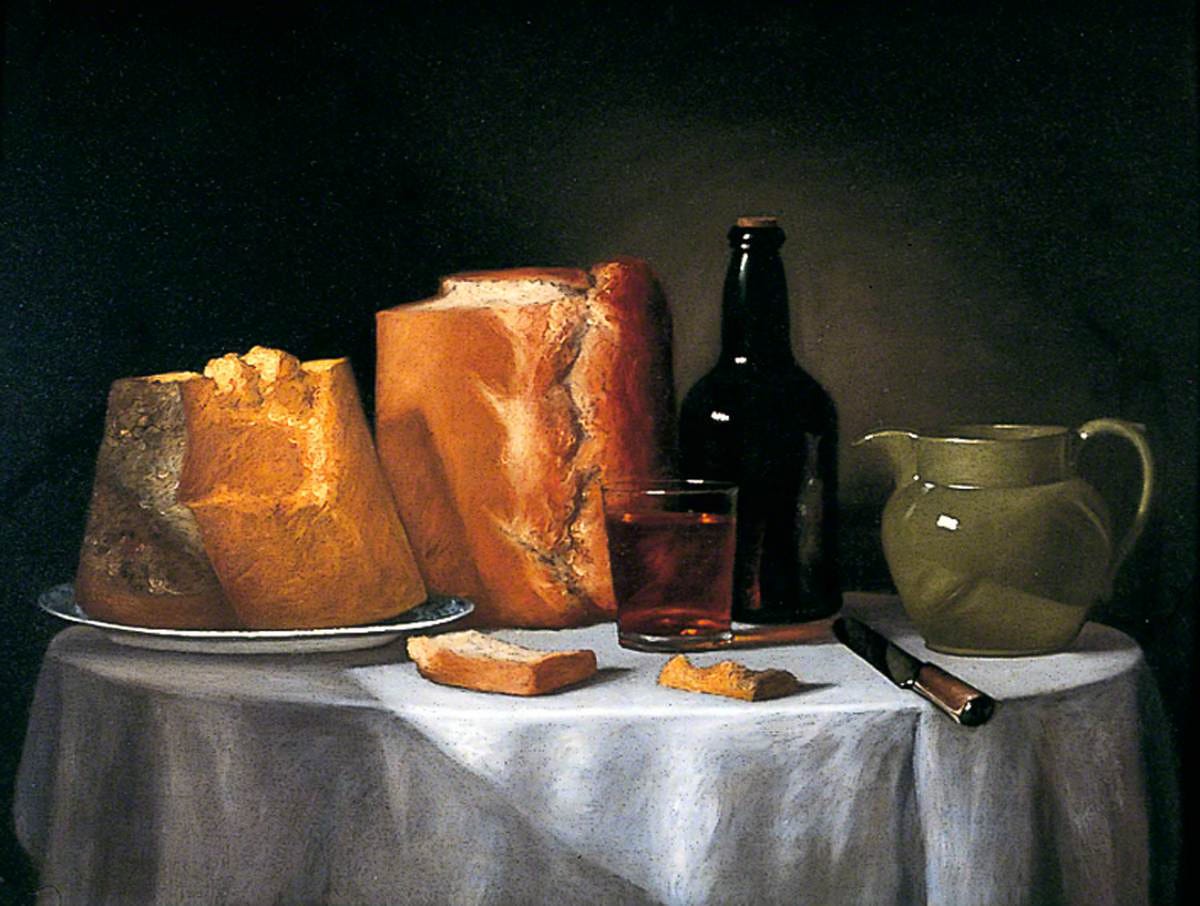
There had been bread and wine for generation after generation before Christ, just as there had been Passover. Just as the English looked to the East before they knew Easter. The symbols were there, thrumming with potency, laden with meaning. The letters of the words were chiseled deep into the structure and the history of things.
But Christians believe that on this day, the planets clicked into place and the writing in the stars erupted into gemlike flame. There was blood on the doorposts of the heavens and the Angel of Death would pass over the earth, leaving the people of God unscathed. There was new life in the springtime, alright. We just never knew how much springtime there was in the world. We just never knew how much new life.
“The Sun at that point in time first assumed power over the day,” wrote Bede on the subject of the Spring equinox. “This is for the sake of a certain symbolism, because the created Sun, which lights up all the stars, signifies the true and eternal light which lighteth every man that cometh into the world.” Arise, says the prophet Isaiah, shine: your light has come. And Christ our passover is sacrificed for us. Therefore let us keep the feast.
Happy Passover, Happy Easter, and God bless you all.
 | A guest post by
|
Thank you! I've had to deal with a copious amount of pseudo-intellectuals with PhDs in nothing close to Christianity push that lie around.
He risen indeed! A blessed and happy Easter to all the New Jerusalemites!