
Letter #166: Let it Be
Thus it is fitting to fulfill all righteousness.


Dad,
I’m sure at some point I’ve mentioned to you that the Greek word for divine “forgiveness” really just means “letting go.” Aphesis: The Gospels very pointedly use this word instead of the more common sungnōmē, which would convey a sense of “understanding” or even “rationalizing” the offense forgiven.
Instead of that, aphesis means letting go even when you can’t understand, letting go even of things so foreign and offensive to you that they seem to cut against the grain of your own soul. It doesn’t necessarily mean canceling or reversing your moral judgments. But it can mean holding back from enforcing them so that other people can live and breathe in your presence.
We all know instinctively that the liberal hall monitors who lecture their uncles on racism are just as repulsive as the victorious Trump voter who rubs it in his niece’s face. Why? Because tempting as the high ground looks from below, it’s lonely up there. Communion at the table of love comes at the cost of letting go. “How many times shall I let my brother off the hook?” “As many as seven times seventy.” As long as it takes, in other words, to make peace with each other.
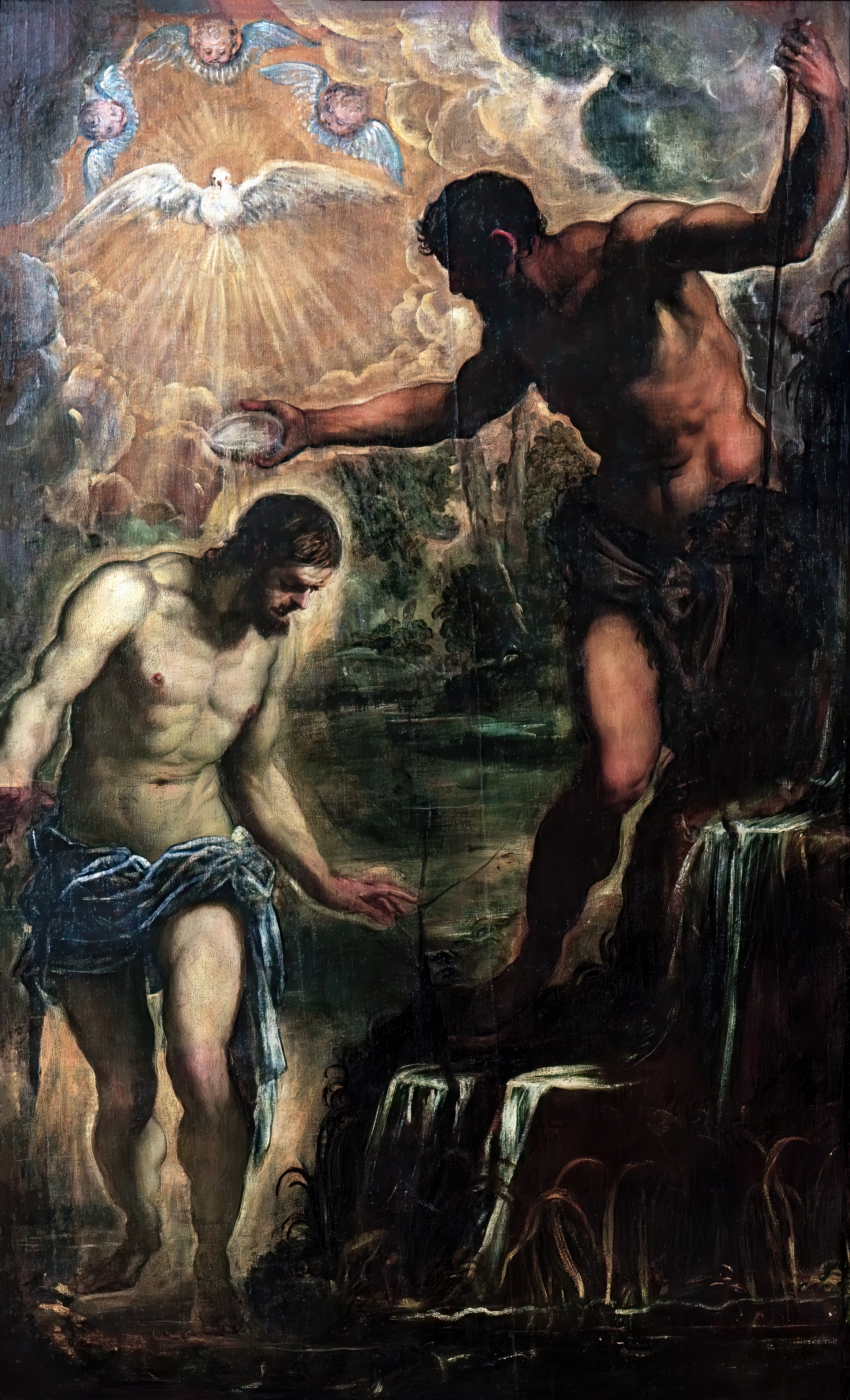
It’s hard, God knows. I think he truly does, since his judgments, unlike ours, are just and true in the merest particular. Every wrong turn on our part is a contradiction of his very being, down to the marrow of righteousness. To be with us at all, he has in some sense to hold back his nature, to let go for the time being of who he is. “Lord, I need to be baptized by you—and you come to me?” Aphes, answers God: “Let it be this way for now. This is the best way for us to fulfill all righteousness.”
God without us is perfectly righteous. But not, perhaps, as righteous as he could conceivably be. Counterintuitively, to fill out the full measure of all possible righteousness, you have to pause the order of operations momentarily, like a poet who breaks the meter of one line to make the whole sonnet maximally beautiful.
It’s a temporary suspension, a cosmic letting go to make room for the lost to be saved. And in case the point wasn’t clear enough, Matthew describes Christ letting go of his own spirit on the cross—though it’s often lost in translation. “And having cried aloud, he gave up the ghost”: aphēken. The ultimate act of forgiveness.
And the heart of the thing is this: the forgiveness only mattered because he would have been within his rights to condemn. Forgiving doesn’t mean ignoring the moral law—just the opposite, in fact. It takes the moral law for granted.
You don’t get real mercy except from a church, a family, a marriage, that knows right from wrong but chooses to let grievance and scorekeeping go. It’s what the kids call a trade offer: in exchange for punishment and forced obedience you get freedom and, God willing, voluntary love. For only he who lets go of his life shall find it.
Love,
Spencer
Painting: Jacopo Tintoretto, CC BY-SA 4.0, via Wikimedia Commons.
 | A guest post by
|
Love this.
Yes - except the video of theKnowles' Thanksgiving was, in fact, hilarious.
But what beautiful thought you shared ( as someone who wrestles daily to forgive my mother.) I've struggled not to view forgiveness as a pardon of her actions. But, indeed, I need to approach forgiveness specifically in spite of it.